

Curtains look effortless only after the proportions, stack-back, fullness, heading and finished length have been measured as one system.
How High and Wide Should You Hang Curtains? is best approached as a sequence of evidence-based decisions rather than a shopping exercise. Begin with the existing home, the people using it and the performance problem that needs to be solved. Then compare complete systems—including preparation, installation, maintenance and future repair—rather than isolated finishes. This guide is written for Canadian conditions while remaining useful wherever climate, durable construction and thoughtful living matter. It offers a framework for speaking with designers, contractors, suppliers and authorities, but it does not replace project-specific structural, electrical, plumbing, mechanical, horticultural or code advice.
The proportion that usually works
Mounting the rod above the frame and extending it beyond both sides generally makes a window feel taller and preserves glass when curtains are open. Exact placement depends on ceiling, trim and obstructions.
Turn that principle into a written requirement. Note dimensions, existing conditions, household routines, seasonal changes and the result that would count as success. Photographs and simple measured sketches prevent the team from relying on memory. For how high and wide should you hang curtains, an attractive reference image is useful only after it has been translated into constraints that belong to the actual home.
Compare options on the same page. Include purchase price, preparation, labour, associated trades, operating or cleaning needs, expected service life, repairability and disposal. Ask what is excluded and what assumption could change the price. This normalized comparison exposes proposals that look inexpensive because a necessary component has been omitted.
Mock up the decision at realistic scale whenever possible. Use painter tape, full-size samples, temporary furniture outlines or a small test area, then review it in daylight and after dark. Invite the people who clean, maintain and use the space to test the choice. A brief trial often reveals conflicts that drawings and small samples cannot show.
Before approval, identify who designs the detail, who installs it, who inspects it and who responds if the result falls short. Record model numbers, colours, dimensions and accepted substitutions. The final record should be clear enough that another professional could understand the decision without reconstructing conversations.
- Record the existing condition before choosing a product or scope.
- Compare equivalent specifications, installation and exclusions.
- Keep samples, drawings, approvals and care instructions in the project file.
Measure the wall before buying anything
Record ceiling height, frame width, trim, sill, floor variation, radiators, vents, switches and nearby corners. Measure in several locations because older rooms are rarely perfectly square.
Turn that principle into a written requirement. Note dimensions, existing conditions, household routines, seasonal changes and the result that would count as success. Photographs and simple measured sketches prevent the team from relying on memory. For how high and wide should you hang curtains, an attractive reference image is useful only after it has been translated into constraints that belong to the actual home.
Compare options on the same page. Include purchase price, preparation, labour, associated trades, operating or cleaning needs, expected service life, repairability and disposal. Ask what is excluded and what assumption could change the price. This normalized comparison exposes proposals that look inexpensive because a necessary component has been omitted.
Mock up the decision at realistic scale whenever possible. Use painter tape, full-size samples, temporary furniture outlines or a small test area, then review it in daylight and after dark. Invite the people who clean, maintain and use the space to test the choice. A brief trial often reveals conflicts that drawings and small samples cannot show.
Before approval, identify who designs the detail, who installs it, who inspects it and who responds if the result falls short. Record model numbers, colours, dimensions and accepted substitutions. The final record should be clear enough that another professional could understand the decision without reconstructing conversations.
- Record the existing condition before choosing a product or scope.
- Compare equivalent specifications, installation and exclusions.
- Keep samples, drawings, approvals and care instructions in the project file.
Set the rod height
Use the architecture as the reference. A rod near the ceiling or midway between trim and ceiling often works; leave enough space for rings, finials and installation hardware.
Turn that principle into a written requirement. Note dimensions, existing conditions, household routines, seasonal changes and the result that would count as success. Photographs and simple measured sketches prevent the team from relying on memory. For how high and wide should you hang curtains, an attractive reference image is useful only after it has been translated into constraints that belong to the actual home.
Compare options on the same page. Include purchase price, preparation, labour, associated trades, operating or cleaning needs, expected service life, repairability and disposal. Ask what is excluded and what assumption could change the price. This normalized comparison exposes proposals that look inexpensive because a necessary component has been omitted.
Mock up the decision at realistic scale whenever possible. Use painter tape, full-size samples, temporary furniture outlines or a small test area, then review it in daylight and after dark. Invite the people who clean, maintain and use the space to test the choice. A brief trial often reveals conflicts that drawings and small samples cannot show.
Before approval, identify who designs the detail, who installs it, who inspects it and who responds if the result falls short. Record model numbers, colours, dimensions and accepted substitutions. The final record should be clear enough that another professional could understand the decision without reconstructing conversations.
- Record the existing condition before choosing a product or scope.
- Compare equivalent specifications, installation and exclusions.
- Keep samples, drawings, approvals and care instructions in the project file.
Calculate rod width and stack-back
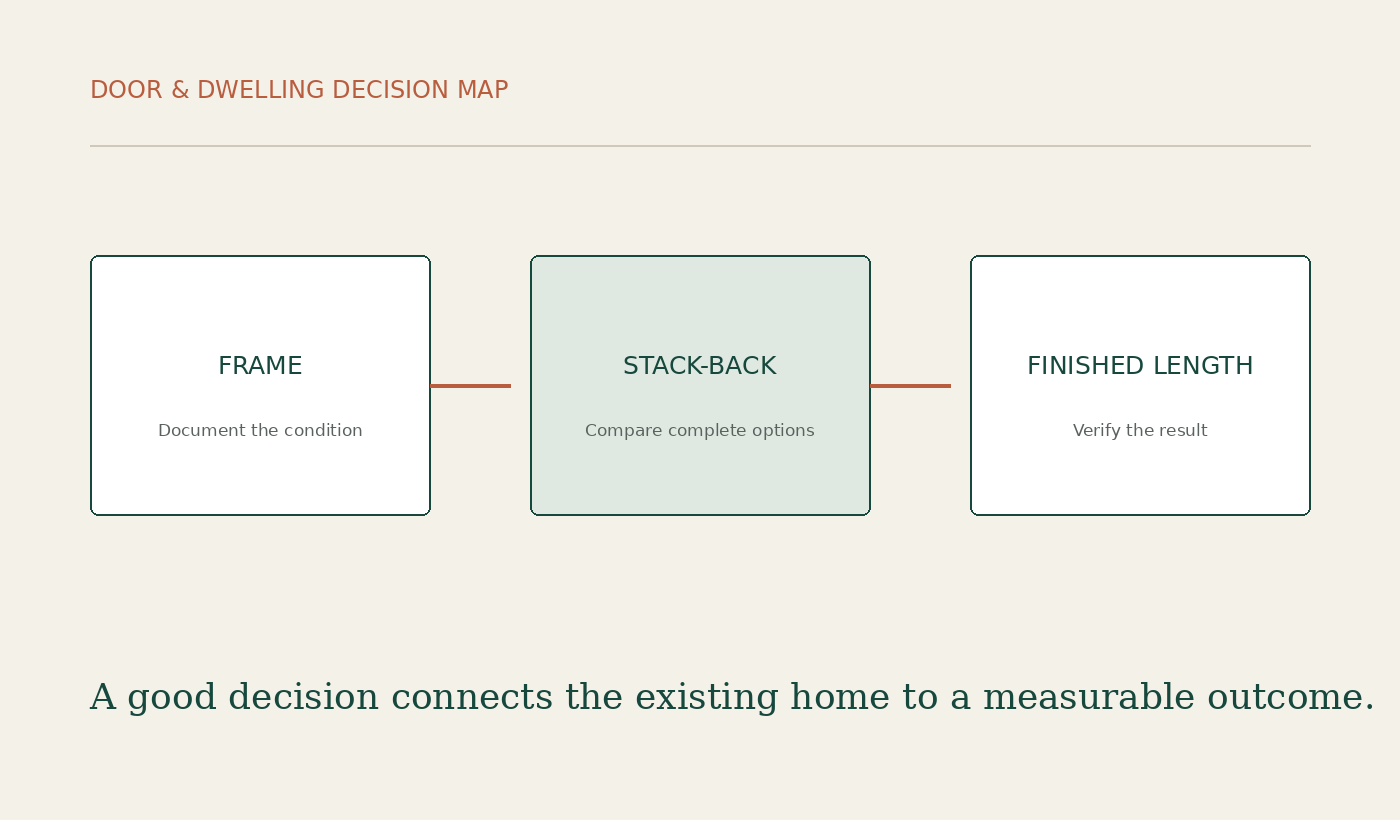
The rod must hold open panels mostly off the glass. Fabric thickness, heading and panel width determine stack-back, so a narrow strip beyond the trim is not always sufficient.
Turn that principle into a written requirement. Note dimensions, existing conditions, household routines, seasonal changes and the result that would count as success. Photographs and simple measured sketches prevent the team from relying on memory. For how high and wide should you hang curtains, an attractive reference image is useful only after it has been translated into constraints that belong to the actual home.
Compare options on the same page. Include purchase price, preparation, labour, associated trades, operating or cleaning needs, expected service life, repairability and disposal. Ask what is excluded and what assumption could change the price. This normalized comparison exposes proposals that look inexpensive because a necessary component has been omitted.
Mock up the decision at realistic scale whenever possible. Use painter tape, full-size samples, temporary furniture outlines or a small test area, then review it in daylight and after dark. Invite the people who clean, maintain and use the space to test the choice. A brief trial often reveals conflicts that drawings and small samples cannot show.
Before approval, identify who designs the detail, who installs it, who inspects it and who responds if the result falls short. Record model numbers, colours, dimensions and accepted substitutions. The final record should be clear enough that another professional could understand the decision without reconstructing conversations.
- Record the existing condition before choosing a product or scope.
- Compare equivalent specifications, installation and exclusions.
- Keep samples, drawings, approvals and care instructions in the project file.
Choose the finished length
A small floor clearance is practical; a precise break can feel relaxed; pooling is decorative but demands maintenance. Measure from the actual ring or carrier, not from the rod alone.
Turn that principle into a written requirement. Note dimensions, existing conditions, household routines, seasonal changes and the result that would count as success. Photographs and simple measured sketches prevent the team from relying on memory. For how high and wide should you hang curtains, an attractive reference image is useful only after it has been translated into constraints that belong to the actual home.
Compare options on the same page. Include purchase price, preparation, labour, associated trades, operating or cleaning needs, expected service life, repairability and disposal. Ask what is excluded and what assumption could change the price. This normalized comparison exposes proposals that look inexpensive because a necessary component has been omitted.
Mock up the decision at realistic scale whenever possible. Use painter tape, full-size samples, temporary furniture outlines or a small test area, then review it in daylight and after dark. Invite the people who clean, maintain and use the space to test the choice. A brief trial often reveals conflicts that drawings and small samples cannot show.
Before approval, identify who designs the detail, who installs it, who inspects it and who responds if the result falls short. Record model numbers, colours, dimensions and accepted substitutions. The final record should be clear enough that another professional could understand the decision without reconstructing conversations.
- Record the existing condition before choosing a product or scope.
- Compare equivalent specifications, installation and exclusions.
- Keep samples, drawings, approvals and care instructions in the project file.
Understand fullness
Flat fabric equal to rod width looks skimpy. Most curtains need meaningful fullness, with sheers often requiring more than heavy lined fabric. Follow the workroom recommendation for the selected heading.
Turn that principle into a written requirement. Note dimensions, existing conditions, household routines, seasonal changes and the result that would count as success. Photographs and simple measured sketches prevent the team from relying on memory. For how high and wide should you hang curtains, an attractive reference image is useful only after it has been translated into constraints that belong to the actual home.
Compare options on the same page. Include purchase price, preparation, labour, associated trades, operating or cleaning needs, expected service life, repairability and disposal. Ask what is excluded and what assumption could change the price. This normalized comparison exposes proposals that look inexpensive because a necessary component has been omitted.
Mock up the decision at realistic scale whenever possible. Use painter tape, full-size samples, temporary furniture outlines or a small test area, then review it in daylight and after dark. Invite the people who clean, maintain and use the space to test the choice. A brief trial often reveals conflicts that drawings and small samples cannot show.
Before approval, identify who designs the detail, who installs it, who inspects it and who responds if the result falls short. Record model numbers, colours, dimensions and accepted substitutions. The final record should be clear enough that another professional could understand the decision without reconstructing conversations.
- Record the existing condition before choosing a product or scope.
- Compare equivalent specifications, installation and exclusions.
- Keep samples, drawings, approvals and care instructions in the project file.
Select headings and hardware together
Pleats, grommets, rod pockets, tracks and rings change the top dimension and movement. Hardware should carry the total fabric weight without sagging.
Turn that principle into a written requirement. Note dimensions, existing conditions, household routines, seasonal changes and the result that would count as success. Photographs and simple measured sketches prevent the team from relying on memory. For how high and wide should you hang curtains, an attractive reference image is useful only after it has been translated into constraints that belong to the actual home.
Compare options on the same page. Include purchase price, preparation, labour, associated trades, operating or cleaning needs, expected service life, repairability and disposal. Ask what is excluded and what assumption could change the price. This normalized comparison exposes proposals that look inexpensive because a necessary component has been omitted.
Mock up the decision at realistic scale whenever possible. Use painter tape, full-size samples, temporary furniture outlines or a small test area, then review it in daylight and after dark. Invite the people who clean, maintain and use the space to test the choice. A brief trial often reveals conflicts that drawings and small samples cannot show.
Before approval, identify who designs the detail, who installs it, who inspects it and who responds if the result falls short. Record model numbers, colours, dimensions and accepted substitutions. The final record should be clear enough that another professional could understand the decision without reconstructing conversations.
- Record the existing condition before choosing a product or scope.
- Compare equivalent specifications, installation and exclusions.
- Keep samples, drawings, approvals and care instructions in the project file.

Solve difficult windows
Corners, bays, patio doors, radiators and shallow walls may need ceiling tracks, split draws, stationary side panels or shades paired with decorative drapery.
Turn that principle into a written requirement. Note dimensions, existing conditions, household routines, seasonal changes and the result that would count as success. Photographs and simple measured sketches prevent the team from relying on memory. For how high and wide should you hang curtains, an attractive reference image is useful only after it has been translated into constraints that belong to the actual home.
Compare options on the same page. Include purchase price, preparation, labour, associated trades, operating or cleaning needs, expected service life, repairability and disposal. Ask what is excluded and what assumption could change the price. This normalized comparison exposes proposals that look inexpensive because a necessary component has been omitted.
Mock up the decision at realistic scale whenever possible. Use painter tape, full-size samples, temporary furniture outlines or a small test area, then review it in daylight and after dark. Invite the people who clean, maintain and use the space to test the choice. A brief trial often reveals conflicts that drawings and small samples cannot show.
Before approval, identify who designs the detail, who installs it, who inspects it and who responds if the result falls short. Record model numbers, colours, dimensions and accepted substitutions. The final record should be clear enough that another professional could understand the decision without reconstructing conversations.
- Record the existing condition before choosing a product or scope.
- Compare equivalent specifications, installation and exclusions.
- Keep samples, drawings, approvals and care instructions in the project file.
Lining, light control and thermal comfort
Lining improves body and protects fabric; blackout layers control light but can add bulk. Curtains can improve comfort near glass but must not trap moisture or block heat sources unsafely.
Turn that principle into a written requirement. Note dimensions, existing conditions, household routines, seasonal changes and the result that would count as success. Photographs and simple measured sketches prevent the team from relying on memory. For how high and wide should you hang curtains, an attractive reference image is useful only after it has been translated into constraints that belong to the actual home.
Compare options on the same page. Include purchase price, preparation, labour, associated trades, operating or cleaning needs, expected service life, repairability and disposal. Ask what is excluded and what assumption could change the price. This normalized comparison exposes proposals that look inexpensive because a necessary component has been omitted.
Mock up the decision at realistic scale whenever possible. Use painter tape, full-size samples, temporary furniture outlines or a small test area, then review it in daylight and after dark. Invite the people who clean, maintain and use the space to test the choice. A brief trial often reveals conflicts that drawings and small samples cannot show.
Before approval, identify who designs the detail, who installs it, who inspects it and who responds if the result falls short. Record model numbers, colours, dimensions and accepted substitutions. The final record should be clear enough that another professional could understand the decision without reconstructing conversations.
- Record the existing condition before choosing a product or scope.
- Compare equivalent specifications, installation and exclusions.
- Keep samples, drawings, approvals and care instructions in the project file.
Final installation checklist
Mock up rod ends with painter tape, verify stud or anchor locations, steam panels and live with the position before altering custom fabric.
Turn that principle into a written requirement. Note dimensions, existing conditions, household routines, seasonal changes and the result that would count as success. Photographs and simple measured sketches prevent the team from relying on memory. For how high and wide should you hang curtains, an attractive reference image is useful only after it has been translated into constraints that belong to the actual home.
Compare options on the same page. Include purchase price, preparation, labour, associated trades, operating or cleaning needs, expected service life, repairability and disposal. Ask what is excluded and what assumption could change the price. This normalized comparison exposes proposals that look inexpensive because a necessary component has been omitted.
Mock up the decision at realistic scale whenever possible. Use painter tape, full-size samples, temporary furniture outlines or a small test area, then review it in daylight and after dark. Invite the people who clean, maintain and use the space to test the choice. A brief trial often reveals conflicts that drawings and small samples cannot show.
Before approval, identify who designs the detail, who installs it, who inspects it and who responds if the result falls short. Record model numbers, colours, dimensions and accepted substitutions. The final record should be clear enough that another professional could understand the decision without reconstructing conversations.
- Record the existing condition before choosing a product or scope.
- Compare equivalent specifications, installation and exclusions.
- Keep samples, drawings, approvals and care instructions in the project file.
Sources and further reading
- Natural Resources Canada: Energy-efficient windows and doors
- Canada Mortgage and Housing Corporation: Home renovation and maintenance
Codes, programs, prices and product specifications can change. Confirm current requirements with the relevant authority and qualified project professionals.
Continue exploring
Related from Door & Dwelling

Post
How to Choose Paint Colours for an Entire Home
Build a connected whole-home paint palette by considering light, sight lines, fixed materials and the purpose of each room.
Post
How to Design a Living Room That Works Beautifully
A beautiful living room is also easy to enter, comfortable to use and flexible enough for conversation, reading, entertaining and quiet evenings.
Post
Lighting Canadian Homes Through a Long Winter
How layered lighting, colour temperature, glare control and daylight planning can make winter interiors more comfortable and legible.
Post
Small Canadian Condo Design That Actually Works
A disciplined approach to storage, flexible rooms, visual calm and durable choices in compact Canadian condominium homes.
Post
The Canadian Mudroom: Designing for Snow, Salt and Daily Life
How to plan a hardworking entry around wet boots, outerwear, pets, sports equipment, drying and household circulation.
Post
Modern Canadian Cottage Interiors Without the Clichés
A restrained approach to cottage rooms that prioritizes landscape, durable materials, gathering and the rhythms of seasonal use.Research
Sources & further reading
- Natural Resources Canada: Energy-efficient windows and doors — https://natural-resources.canada.ca/energy-efficiency/products/windows-doors-skylights/13939
- Canada Mortgage and Housing Corporation: Home renovation and maintenance — https://www.cmhc-schl.gc.ca/consumers/home-maintenance-and-renovation