
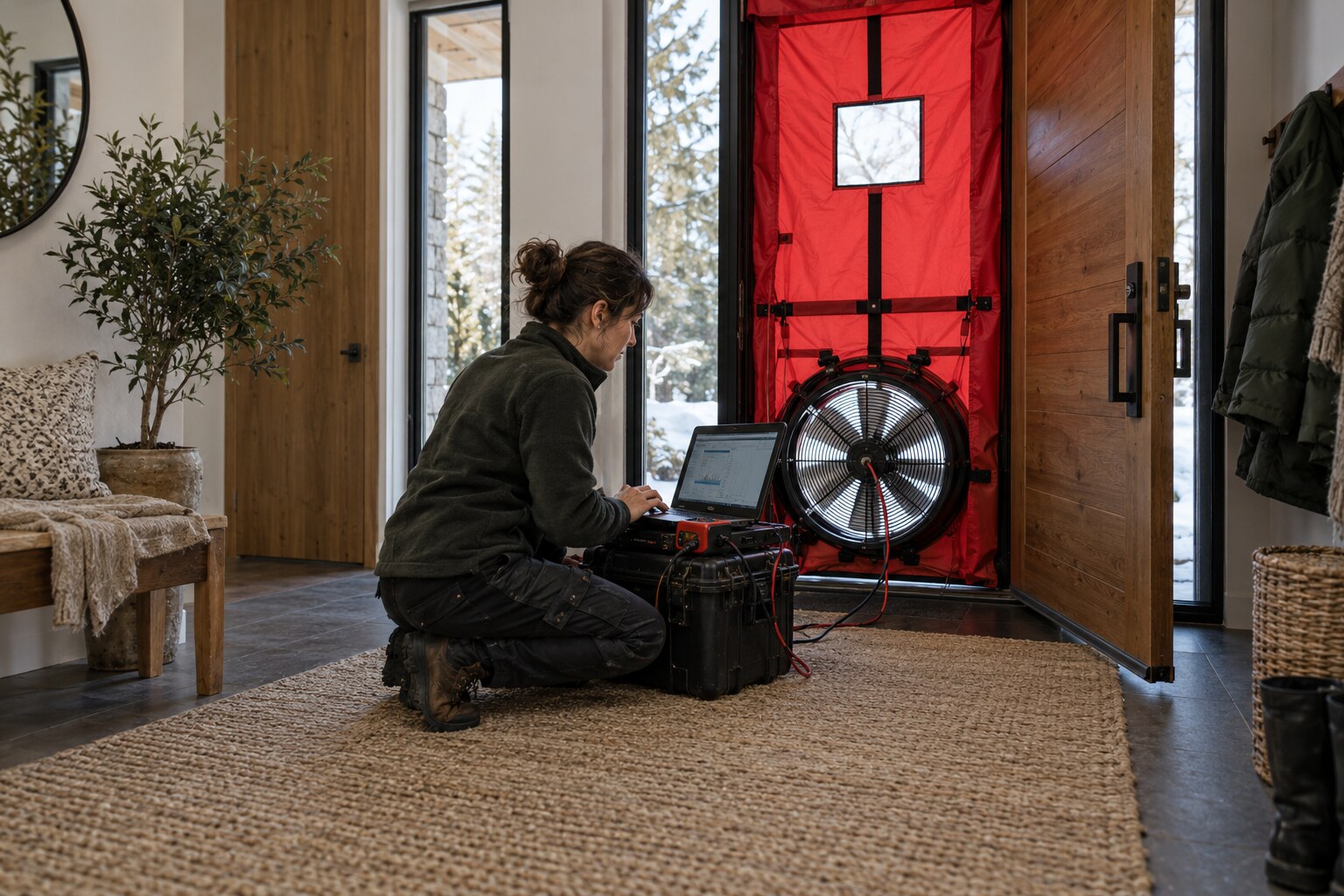
What a homeowner should prepare, ask and document when arranging a qualified home-energy assessment.
This guide is an editorial planning resource for Canadian homeowners. Requirements, property conditions, products, programs and professional responsibilities vary by location and project. Use it to organize better questions, not to replace site-specific advice.
Before you begin
Strong Home Performance decisions begin with a clear description of the home, the household need and the outcome being sought. Canadian houses differ widely by climate region, construction era, municipality, building type and previous alteration. Before comparing products or prices, document what is visible, what is assumed and what requires investigation. That distinction protects the project from false certainty and gives architects, designers, contractors, energy advisors and other specialists a more useful starting point. Keep the brief practical: identify priorities, constraints, decision-makers, timing pressures and the records that already exist. A thoughtful plan also acknowledges what it cannot establish from a general article. Site conditions, code obligations, permit requirements, condominium rules, heritage controls and manufacturer instructions must be verified for the actual property.
Define the reason for assessment
Approach Define the reason for assessment as a decision with inputs, dependencies and an acceptance test. In Home Performance, the visible symptom is not always the underlying condition. Record when the concern appears, which rooms or systems are affected, whether it changes by season and what previous work may influence it. Photographs, dated notes, drawings, invoices and equipment information can make a professional review more efficient. Avoid turning a preliminary observation into a diagnosis. The purpose of this stage is to create a reliable problem statement and identify the next person or document needed to confirm it.
Context matters across Canada. Cold winters, summer heat, heavy rain, smoke events, coastal exposure and freeze-thaw cycles do not affect every property in the same way. Municipal approval processes and provincial requirements also differ. For Define the reason for assessment, start with the authority having jurisdiction, current official guidance and the actual construction of the home. A recommendation that is sensible for a newer detached house may be unsuitable for a heritage property, condominium, rural house or seasonal cottage. Write those constraints into the brief so they remain visible when proposals are compared.
The scope should state both inclusions and boundaries. Describe the desired outcome, affected areas, interfaces with existing work, who supplies each item, who installs it and what completion information is required. If part of Define the reason for assessment depends on demolition, testing, design development or an approval, label it as unresolved rather than burying it inside a fixed assumption. Clear exclusions and allowances are not signs of a weak proposal; they reveal where uncertainty remains. What matters is whether those uncertainties are understandable, comparable and assigned to someone for resolution.
Cost and schedule should follow the verified scope. A preliminary planning range is not a quotation, and the lowest initial number may omit design, approvals, protection, disposal, taxes, owner-supplied products, temporary arrangements or closeout work. Track Define the reason for assessment as its own decision line with the estimate source and date. When information changes, update the budget and schedule together. This creates a transparent history of why the project moved, rather than a final total that cannot be explained.
Finish by defining the record that should remain with the home. Depending on the work, this may include approved drawings, inspection results, product model numbers, colour or finish schedules, commissioning information, photographs before concealment, warranties and maintenance instructions. For Define the reason for assessment, record the qualified professionals involved and the date the information was reviewed. These details support future maintenance, renovations, insurance conversations and eventual ownership transitions.
Questions to document
- What is known, and what still needs qualified verification?
- Who is responsible for the decision, installation, approval and final documentation?
- What assumptions, exclusions, dependencies or maintenance requirements affect the choice?
- What evidence will confirm that the intended outcome has been achieved?
Confirm advisor and program requirements
Context matters across Canada. Cold winters, summer heat, heavy rain, smoke events, coastal exposure and freeze-thaw cycles do not affect every property in the same way. Municipal approval processes and provincial requirements also differ. For Confirm advisor and program requirements, start with the authority having jurisdiction, current official guidance and the actual construction of the home. A recommendation that is sensible for a newer detached house may be unsuitable for a heritage property, condominium, rural house or seasonal cottage. Write those constraints into the brief so they remain visible when proposals are compared.
The scope should state both inclusions and boundaries. Describe the desired outcome, affected areas, interfaces with existing work, who supplies each item, who installs it and what completion information is required. If part of Confirm advisor and program requirements depends on demolition, testing, design development or an approval, label it as unresolved rather than burying it inside a fixed assumption. Clear exclusions and allowances are not signs of a weak proposal; they reveal where uncertainty remains. What matters is whether those uncertainties are understandable, comparable and assigned to someone for resolution.
Cost and schedule should follow the verified scope. A preliminary planning range is not a quotation, and the lowest initial number may omit design, approvals, protection, disposal, taxes, owner-supplied products, temporary arrangements or closeout work. Track Confirm advisor and program requirements as its own decision line with the estimate source and date. When information changes, update the budget and schedule together. This creates a transparent history of why the project moved, rather than a final total that cannot be explained.
Finish by defining the record that should remain with the home. Depending on the work, this may include approved drawings, inspection results, product model numbers, colour or finish schedules, commissioning information, photographs before concealment, warranties and maintenance instructions. For Confirm advisor and program requirements, record the qualified professionals involved and the date the information was reviewed. These details support future maintenance, renovations, insurance conversations and eventual ownership transitions.
Approach Confirm advisor and program requirements as a decision with inputs, dependencies and an acceptance test. In Home Performance, the visible symptom is not always the underlying condition. Record when the concern appears, which rooms or systems are affected, whether it changes by season and what previous work may influence it. Photographs, dated notes, drawings, invoices and equipment information can make a professional review more efficient. Avoid turning a preliminary observation into a diagnosis. The purpose of this stage is to create a reliable problem statement and identify the next person or document needed to confirm it.
Questions to document
- What is known, and what still needs qualified verification?
- Who is responsible for the decision, installation, approval and final documentation?
- What assumptions, exclusions, dependencies or maintenance requirements affect the choice?
- What evidence will confirm that the intended outcome has been achieved?
Prepare property information
The scope should state both inclusions and boundaries. Describe the desired outcome, affected areas, interfaces with existing work, who supplies each item, who installs it and what completion information is required. If part of Prepare property information depends on demolition, testing, design development or an approval, label it as unresolved rather than burying it inside a fixed assumption. Clear exclusions and allowances are not signs of a weak proposal; they reveal where uncertainty remains. What matters is whether those uncertainties are understandable, comparable and assigned to someone for resolution.
Cost and schedule should follow the verified scope. A preliminary planning range is not a quotation, and the lowest initial number may omit design, approvals, protection, disposal, taxes, owner-supplied products, temporary arrangements or closeout work. Track Prepare property information as its own decision line with the estimate source and date. When information changes, update the budget and schedule together. This creates a transparent history of why the project moved, rather than a final total that cannot be explained.
Finish by defining the record that should remain with the home. Depending on the work, this may include approved drawings, inspection results, product model numbers, colour or finish schedules, commissioning information, photographs before concealment, warranties and maintenance instructions. For Prepare property information, record the qualified professionals involved and the date the information was reviewed. These details support future maintenance, renovations, insurance conversations and eventual ownership transitions.
Approach Prepare property information as a decision with inputs, dependencies and an acceptance test. In Home Performance, the visible symptom is not always the underlying condition. Record when the concern appears, which rooms or systems are affected, whether it changes by season and what previous work may influence it. Photographs, dated notes, drawings, invoices and equipment information can make a professional review more efficient. Avoid turning a preliminary observation into a diagnosis. The purpose of this stage is to create a reliable problem statement and identify the next person or document needed to confirm it.
Context matters across Canada. Cold winters, summer heat, heavy rain, smoke events, coastal exposure and freeze-thaw cycles do not affect every property in the same way. Municipal approval processes and provincial requirements also differ. For Prepare property information, start with the authority having jurisdiction, current official guidance and the actual construction of the home. A recommendation that is sensible for a newer detached house may be unsuitable for a heritage property, condominium, rural house or seasonal cottage. Write those constraints into the brief so they remain visible when proposals are compared.
Questions to document
- What is known, and what still needs qualified verification?
- Who is responsible for the decision, installation, approval and final documentation?
- What assumptions, exclusions, dependencies or maintenance requirements affect the choice?
- What evidence will confirm that the intended outcome has been achieved?
Understand observations and testing
Cost and schedule should follow the verified scope. A preliminary planning range is not a quotation, and the lowest initial number may omit design, approvals, protection, disposal, taxes, owner-supplied products, temporary arrangements or closeout work. Track Understand observations and testing as its own decision line with the estimate source and date. When information changes, update the budget and schedule together. This creates a transparent history of why the project moved, rather than a final total that cannot be explained.
Finish by defining the record that should remain with the home. Depending on the work, this may include approved drawings, inspection results, product model numbers, colour or finish schedules, commissioning information, photographs before concealment, warranties and maintenance instructions. For Understand observations and testing, record the qualified professionals involved and the date the information was reviewed. These details support future maintenance, renovations, insurance conversations and eventual ownership transitions.
Approach Understand observations and testing as a decision with inputs, dependencies and an acceptance test. In Home Performance, the visible symptom is not always the underlying condition. Record when the concern appears, which rooms or systems are affected, whether it changes by season and what previous work may influence it. Photographs, dated notes, drawings, invoices and equipment information can make a professional review more efficient. Avoid turning a preliminary observation into a diagnosis. The purpose of this stage is to create a reliable problem statement and identify the next person or document needed to confirm it.
Context matters across Canada. Cold winters, summer heat, heavy rain, smoke events, coastal exposure and freeze-thaw cycles do not affect every property in the same way. Municipal approval processes and provincial requirements also differ. For Understand observations and testing, start with the authority having jurisdiction, current official guidance and the actual construction of the home. A recommendation that is sensible for a newer detached house may be unsuitable for a heritage property, condominium, rural house or seasonal cottage. Write those constraints into the brief so they remain visible when proposals are compared.
The scope should state both inclusions and boundaries. Describe the desired outcome, affected areas, interfaces with existing work, who supplies each item, who installs it and what completion information is required. If part of Understand observations and testing depends on demolition, testing, design development or an approval, label it as unresolved rather than burying it inside a fixed assumption. Clear exclusions and allowances are not signs of a weak proposal; they reveal where uncertainty remains. What matters is whether those uncertainties are understandable, comparable and assigned to someone for resolution.
Questions to document
- What is known, and what still needs qualified verification?
- Who is responsible for the decision, installation, approval and final documentation?
- What assumptions, exclusions, dependencies or maintenance requirements affect the choice?
- What evidence will confirm that the intended outcome has been achieved?
Ask about sequencing
Finish by defining the record that should remain with the home. Depending on the work, this may include approved drawings, inspection results, product model numbers, colour or finish schedules, commissioning information, photographs before concealment, warranties and maintenance instructions. For Ask about sequencing, record the qualified professionals involved and the date the information was reviewed. These details support future maintenance, renovations, insurance conversations and eventual ownership transitions.
Approach Ask about sequencing as a decision with inputs, dependencies and an acceptance test. In Home Performance, the visible symptom is not always the underlying condition. Record when the concern appears, which rooms or systems are affected, whether it changes by season and what previous work may influence it. Photographs, dated notes, drawings, invoices and equipment information can make a professional review more efficient. Avoid turning a preliminary observation into a diagnosis. The purpose of this stage is to create a reliable problem statement and identify the next person or document needed to confirm it.
Context matters across Canada. Cold winters, summer heat, heavy rain, smoke events, coastal exposure and freeze-thaw cycles do not affect every property in the same way. Municipal approval processes and provincial requirements also differ. For Ask about sequencing, start with the authority having jurisdiction, current official guidance and the actual construction of the home. A recommendation that is sensible for a newer detached house may be unsuitable for a heritage property, condominium, rural house or seasonal cottage. Write those constraints into the brief so they remain visible when proposals are compared.
The scope should state both inclusions and boundaries. Describe the desired outcome, affected areas, interfaces with existing work, who supplies each item, who installs it and what completion information is required. If part of Ask about sequencing depends on demolition, testing, design development or an approval, label it as unresolved rather than burying it inside a fixed assumption. Clear exclusions and allowances are not signs of a weak proposal; they reveal where uncertainty remains. What matters is whether those uncertainties are understandable, comparable and assigned to someone for resolution.
Cost and schedule should follow the verified scope. A preliminary planning range is not a quotation, and the lowest initial number may omit design, approvals, protection, disposal, taxes, owner-supplied products, temporary arrangements or closeout work. Track Ask about sequencing as its own decision line with the estimate source and date. When information changes, update the budget and schedule together. This creates a transparent history of why the project moved, rather than a final total that cannot be explained.
Questions to document
- What is known, and what still needs qualified verification?
- Who is responsible for the decision, installation, approval and final documentation?
- What assumptions, exclusions, dependencies or maintenance requirements affect the choice?
- What evidence will confirm that the intended outcome has been achieved?
Keep reports with the home record
Approach Keep reports with the home record as a decision with inputs, dependencies and an acceptance test. In Home Performance, the visible symptom is not always the underlying condition. Record when the concern appears, which rooms or systems are affected, whether it changes by season and what previous work may influence it. Photographs, dated notes, drawings, invoices and equipment information can make a professional review more efficient. Avoid turning a preliminary observation into a diagnosis. The purpose of this stage is to create a reliable problem statement and identify the next person or document needed to confirm it.
Context matters across Canada. Cold winters, summer heat, heavy rain, smoke events, coastal exposure and freeze-thaw cycles do not affect every property in the same way. Municipal approval processes and provincial requirements also differ. For Keep reports with the home record, start with the authority having jurisdiction, current official guidance and the actual construction of the home. A recommendation that is sensible for a newer detached house may be unsuitable for a heritage property, condominium, rural house or seasonal cottage. Write those constraints into the brief so they remain visible when proposals are compared.
The scope should state both inclusions and boundaries. Describe the desired outcome, affected areas, interfaces with existing work, who supplies each item, who installs it and what completion information is required. If part of Keep reports with the home record depends on demolition, testing, design development or an approval, label it as unresolved rather than burying it inside a fixed assumption. Clear exclusions and allowances are not signs of a weak proposal; they reveal where uncertainty remains. What matters is whether those uncertainties are understandable, comparable and assigned to someone for resolution.
Cost and schedule should follow the verified scope. A preliminary planning range is not a quotation, and the lowest initial number may omit design, approvals, protection, disposal, taxes, owner-supplied products, temporary arrangements or closeout work. Track Keep reports with the home record as its own decision line with the estimate source and date. When information changes, update the budget and schedule together. This creates a transparent history of why the project moved, rather than a final total that cannot be explained.
Finish by defining the record that should remain with the home. Depending on the work, this may include approved drawings, inspection results, product model numbers, colour or finish schedules, commissioning information, photographs before concealment, warranties and maintenance instructions. For Keep reports with the home record, record the qualified professionals involved and the date the information was reviewed. These details support future maintenance, renovations, insurance conversations and eventual ownership transitions.
Questions to document
- What is known, and what still needs qualified verification?
- Who is responsible for the decision, installation, approval and final documentation?
- What assumptions, exclusions, dependencies or maintenance requirements affect the choice?
- What evidence will confirm that the intended outcome has been achieved?
A responsible next step
Turn the findings into a written brief, keep source dates visible and confirm project-specific decisions with the appropriate qualified professionals and local authorities. Preserve drawings, approvals, product information, photographs, warranties and maintenance requirements with the property record. Door & Dwelling does not guarantee costs, savings, approvals, suitability or project outcomes.
Continue exploring
Related from Door & Dwelling

Post
What Belongs in a Home Renovation Record
A durable record of decisions, approvals, products, professionals, warranties and maintenance needs.
Post
Climate-Ready Home Planning by Region
Why resilience priorities differ by local hazards, property conditions and household needs.
Post
How to Renovate Without Losing a Home’s Character
A practical way to identify significant features and make new work feel deliberate rather than imitative.
Post
Planning a Bathroom Renovation in Canada
A moisture-aware planning sequence for layout, ventilation, waterproofing responsibilities, finishes and closeout.
Post
How to Create a Renovation Scope of Work
A clear structure for rooms, systems, responsibilities, exclusions and acceptance criteria.
Post